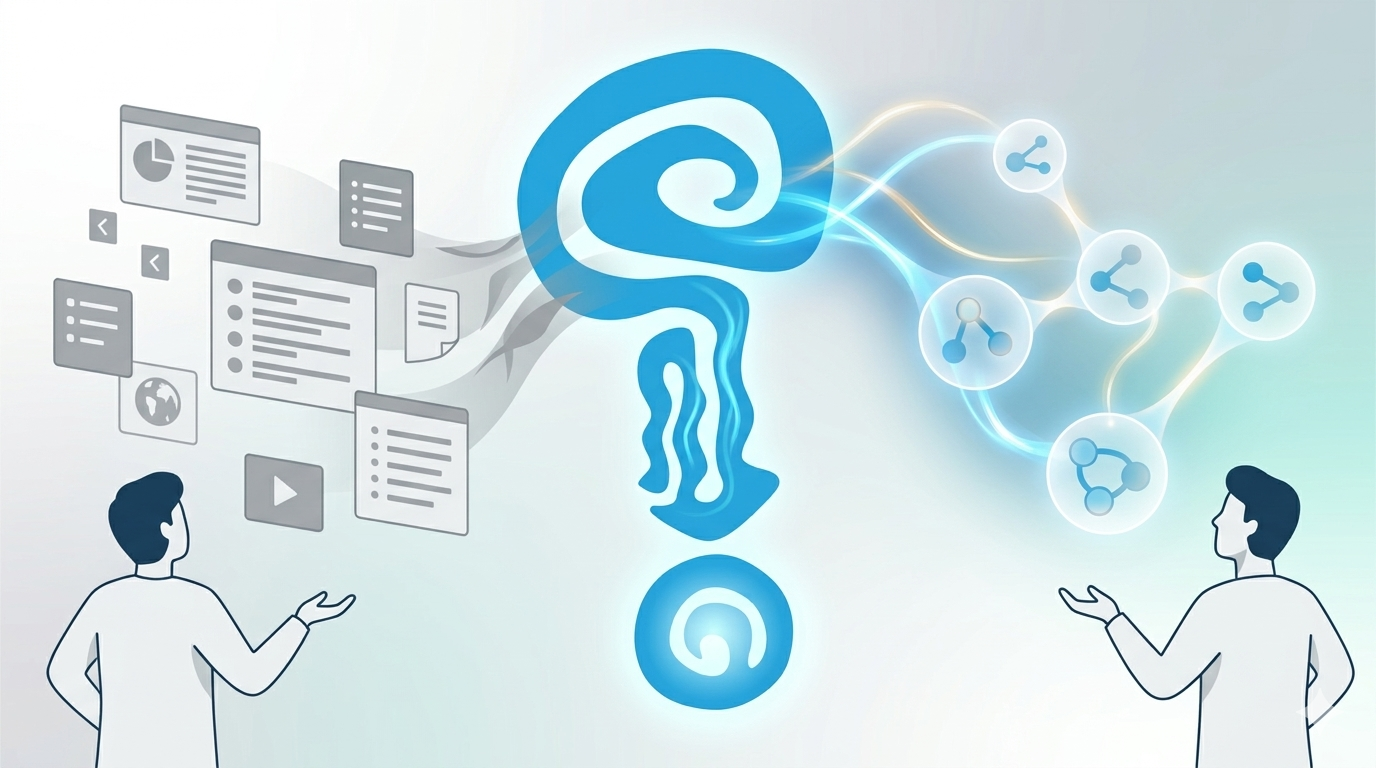
Discover how an AI representative transforms your website into an interactive platform that explains itself to users.
For most of the web’s history, websites were built to display information.
A homepage introduced the company.
Product pages listed features.
Documentation explained how things worked.
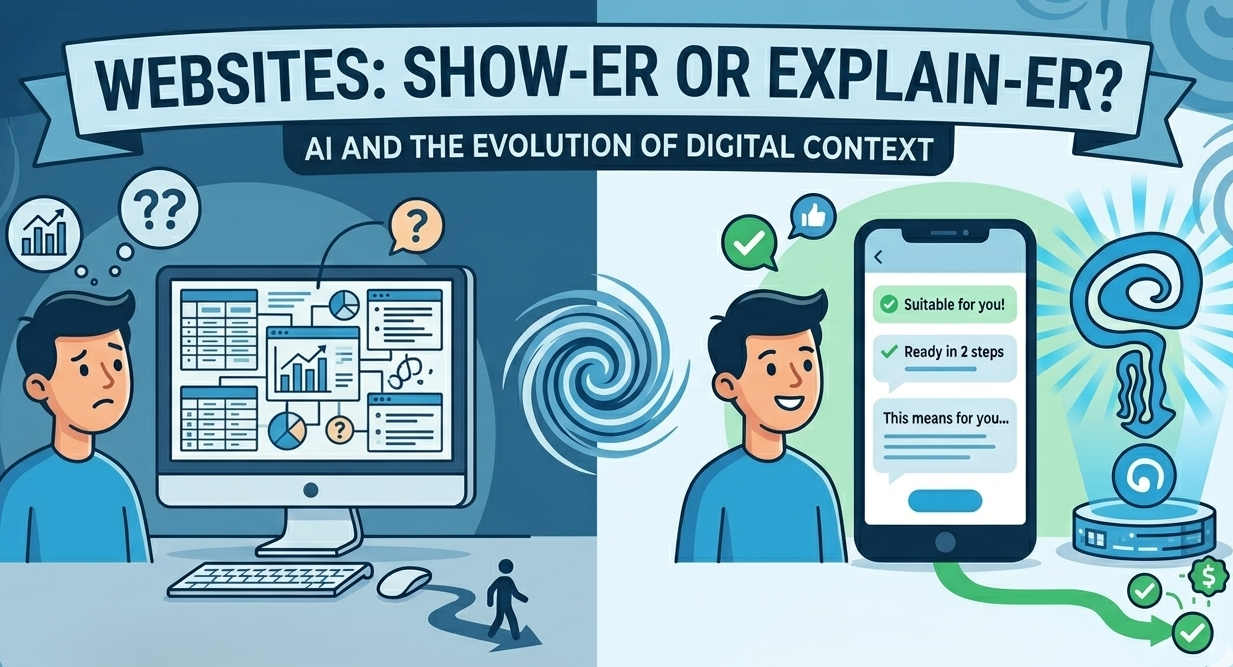
Visitors arrived, read the information, and then tried to interpret it themselves.
It was a one‑way interaction:
information → interpretation by visitor
But what if a website could do more?
What if a website could not only show information, but also explain it?
Why Showing Information Isn’t Always Enough
As products and services become more complex, visitors often arrive with questions like:
- Is this relevant to my situation?
- How difficult would this be to implement?
- Is this meant for companies like mine?
These questions are not about finding facts. They are about making sense of the facts.
Traditional websites present the information, but they leave the interpretation entirely to the visitor.
If visitors don’t understand quickly, they leave.
The Gap Between Information and Understanding
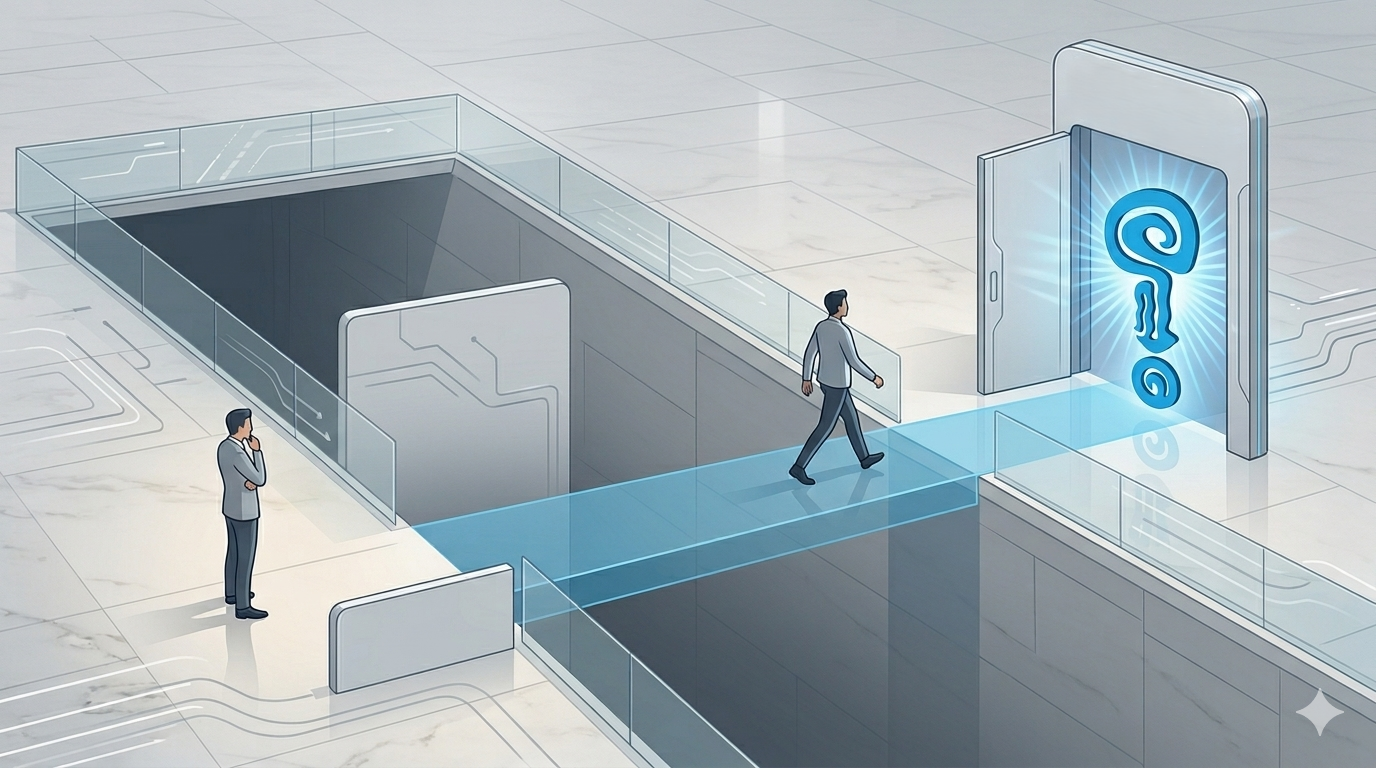
There’s a hidden gap on most websites:
visitor curiosity
↓
content & navigation
↓
visitor uncertainty
When visitors are unsure how the information applies to them, they hesitate.
Some may fill out a contact form or book a demo.
But many simply leave without ever asking their questions.
From the company’s perspective, it looks like lost traffic.
From the visitor’s perspective, it feels like unanswered thoughts.
How Humans Fill This Gap in the Physical World
In a physical showroom or office, this gap is solved naturally.
When someone walks in, they can ask a question.
A representative explains:
- whether the product is suitable
- how implementation works
- what it means for the visitor’s context
This person doesn’t just provide information.
They interpret it.
That interpretation is what creates understanding.
What It Means for a Website to Explain Itself
An AI assistant for a website can fill this gap by becoming a digital representative.
Instead of forcing visitors to interpret everything alone, the website can:
- Listen to visitors’ questions.
- Retrieve the relevant knowledge.
- Provide a contextual explanation.
It’s like adding a new layer to the website:
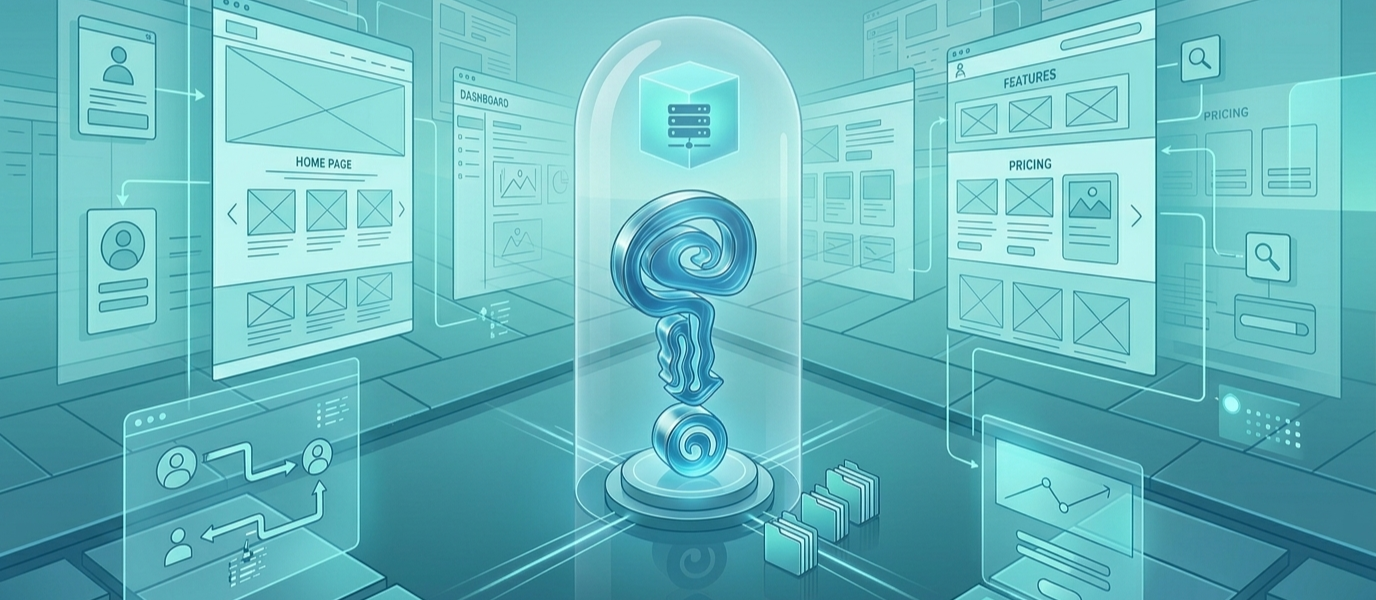
content layer
navigation layer
conversation layer (AI representative)
The conversation layer turns the website into a place where visitors can ask and understand, not just read and hope.
From Static Pages to Interactive Explanations
When your website can explain itself, the interaction changes:
- Visitors no longer feel lost among pages.
- They can ask questions naturally.
- The AI assistant responds using the organization’s own knowledge.
It’s not about automating support or deflecting tickets.
It’s about helping visitors make sense of what they see before they decide to contact you.
Why This Matters in a Global Internet
Your website is like a store in a global bazaar.
People visit from all over the world, at all hours, and in different languages.
They may be curious, but unsure.
When your website can explain itself:
- A visitor from Brazil can ask in Portuguese and get a clear answer.
- A visitor from Japan can clarify how your product integrates with their workflow.
- A visitor from Germany can understand whether your service suits their company size.
It’s as if a knowledgeable representative is always present, ready to help any visitor, in any language, at any time.
Not Just a Chatbot – A Representative
It’s important to distinguish this from a traditional chatbot.
A chatbot often follows scripted flows and focuses on support or FAQs.
An AI website assistant behaves differently:
- It draws on your documentation, knowledge, and explanations.
- It interprets questions in context.
- It represents the voice and perspective of your business.
In that sense, it’s not just a tool.
It’s a digital extension of your organization.
The Future of Website Interaction
We’ve seen the web evolve from:
pages → navigation → search → conversation
In the next phase, the most effective websites will not just show information.
They will help visitors understand.
They will provide explanations before visitors have to commit.
They will bridge the gap between curiosity and contact.
And for the businesses that adopt these concepts, their websites will no longer feel like static brochures.
They will feel like places where ideas are explained, questions are welcomed, and understanding happens — even when you aren’t there.
If you want to explore this idea deeper, you can navigate the full concept framework here:
👉 https://privas.ai/concept
Continue Reading
← Previous: AI Changing Internet Behaviour
Next: The AI Assistant as a Guide →